
What Is a Sexual Affair? A Sex Therapist's Definition of What Actually Counts
If you're reading this, there's a good chance something happened and the two of you can't agree on what to call it. One of you says, "That was an affair." The other says, "It wasn't. We never even slept together." And around and around it goes.
I hear some version of this argument all the time. Maybe it was a kiss. Maybe it was one night. Maybe it was months of texts that got more and more sexual. Whatever it was, the fight has turned into a debate about the word instead of what actually happened between you.
So let me tell you how I think about it. Arguing over whether it "counts" as a sexual affair is a fight nobody wins. If your partner is hurt, if trust was broken, and if your relationship feels damaged, that's your sign that repair is needed, no matter what you call it.
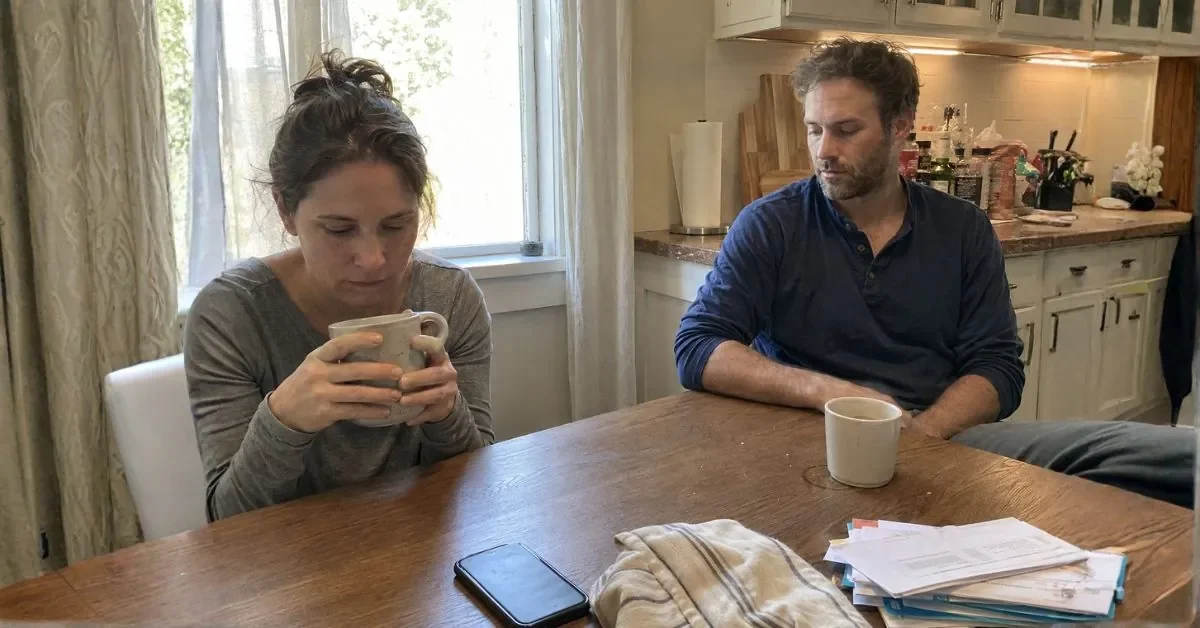
Why the "was it an affair?" argument goes nowhere
Think about what happens if either of you wins this argument.
Say the hurt partner wins. Great, it was officially an affair. Does that make the hurt go away? Does it rebuild any trust? Usually not. And the partner who crossed the line now feels convicted, gets defensive, and pulls back right when you need them to lean in.
Now say the other partner wins. It technically wasn't an affair. What did the hurt partner just hear? That their pain doesn't count. That they're overreacting. That's a second injury stacked on top of the first one.
Either way, you both lose. That's what I call the war of the words. While you're busy fighting over the label, the actual wound sits there untouched, and it doesn't heal on its own.
What counts as a sexual affair?
A sexual affair is sexual contact with someone outside your relationship that goes against what the two of you agreed to, or simply understood, about being together. There has to be something sexual, and it has to cross a line your relationship was counting on.
"Sexual" covers a lot more than intercourse. It includes kissing, touching, and genital contact of any kind, along with oral, anal, and vaginal sex. It can also include sexual language, fantasy, and teasing or flirting. So "we never actually slept together" may be true, but it doesn't settle much.
Here's the thing, though. That definition is less useful than most people hope. It still depends on an agreement. When you got into your relationship, you essentially signed an agreement that the other person had in their head about how you would be faithful. And they signed your agreement. The kicker is that you two probably never actually talked about what those agreements were, how much they overlapped, whether you define things the same way or not, and a host of other detials. And, truth be told, most couples never sit down and spell out their expectations and come to a unified agreement. They just assume it. The assumptions feel so obvious that nobody says them out loud, until one of you finds out the other was assuming something different.

A better test than any definition is this: did it hurt your partner when they found out? If it did, it touched something they were counting on in the relationship. That's is plenty for you to take it seriously.
A sexual affair is also only one kind of betrayal. Emotional affairs, and romantic affairs that are both emotional and sexual, hurt in their own ways. I've written about all three types of affairs in more detail separately.
What the argument is actually telling you
When a couple fights about whether something was an affair, the fight itself is giving you two important pieces of information.
First, someone got hurt. Nobody fights this hard over a word unless something real is at stake. The hurt partner isn't pushing for the label because they love being right. They're pushing because they need the other person to see how much this hurt. "Affair" feels like the only word big enough to make that happen.
Second, you weren't working from the same agreement. If one of you thinks it was a betrayal and the other thinks it was no big deal, there is a real gap in what you were each expecting and that gap is the real problem. You each had a different picture of what your relationship allowed, and you didn't know it until now.
Both of those need attention if you want a healthy relationship going forward. Neither one gets fixed by deciding what to call it.
Is a kiss an affair?
People really do disagree on this one. Some see any kiss as cheating. Others don't think it counts unless the two people had genital contact together.
A romantic or sexual kiss with someone else is sexual contact, and for most couples it's clearly against the rules, even if nobody ever said so. I'm not talking about a peck on the cheek when you greet a friend. In plenty of families and cultures, that's just how you say hello.
But I'd gently ask: does it matter whether the kiss "counts"? If your partner is lying awake over it, it mattered to the relationship. Start there.
Does a one-time thing count?
Yes. A one-night stand is the classic example of a sexual affair. You'll find definitions online that say an affair has to be ongoing, but I don't know many people who felt less betrayed because it only happened once.
The explanations tend to sound the same: "It just happened," "I was drunk," or "It was the heat of the moment." Those things may all be true, and it still hurt. As one couples therapist puts it, there's no such thing as an accidental affair. Somewhere along the way, a choice got made.
How long it went on does matter, just not for this question. A single night and a two-year affair leave different kinds of damage behind. The longer one usually means more lies to untangle and a longer road back to trust. But one night can shake a relationship badly too.
What about sexting, porn, or a strip club?
This is where it gets gray, and couples really do land in different places.
Sexting is usually the easiest of the three to call. You're being sexual with a real person who isn't your partner, and it's almost always kept secret. For most couples, that crosses the line even if the two of you never touch.
Porn and strip clubs are harder. Some people see them as a normal part of sexuality that has nothing to do with the relationship. Others feel as betrayed as they would by a physical affair. Neither of you is crazy for seeing it the way you do.
This is exactly where the definition war shows up most. You could spend weeks arguing about whether porn "is cheating." Or you could notice that one of you is hurt and the two of you clearly have different expectations. That second conversation is the one that actually gets you somewhere. Ask each other what feels ok, what doesn't, and why. And if something was being hidden, ask what the secrecy says about what the person hiding it thought the agreement was.
What if we're in an open relationship?
If the two of you agreed that sex with other people is ok, then it isn't an affair. Consensual non-monogamy (open relationships, swinging, polyamory) is something some couples choose together, and it works well for plenty of them.
But open relationships still have agreements. Maybe it's no one from work, no sleepovers, always using protection, or telling each other before anything happens. Break one of those, and the hurt is just as real. Open relationships can have the same definition war, too: "We're open, so it doesn't count." If your partner is hurt, it counts enough to talk about.
The same goes for any couple, whatever your genders or orientation. What matters is the agreement you made with each other, and what happens when it gets broken.
What I tell couples in my office
When a couple comes in stuck on whether something was an affair, I usually ask them to set the word down for a while. Not forever. Just long enough to look at what's underneath it.
Then we work on two things. The first is the injury. One partner is hurt, and the other partner needs to be able to hear that hurt without arguing about whether it's justified. That's where repair starts. The second is the agreement. What did each of you think the rules were? Where did those pictures not line up? What do you want the agreement to be now?
Something interesting happens once a couple does that work. The argument about the word usually stops mattering. Not because anyone won, but because they finally got what they were actually fighting for.
What do we do now?
That depends a lot on where you're standing.
If you just found out, give yourself some room. You don't need anyone to agree it was an affair for your hurt to be valid. Feeling shocked, angry, numb, or all three at once is normal. Lean on someone you trust, and try not to make big decisions in the first few days.

If you're the one who crossed the line, the most helpful thing you can do is stop arguing the definition. "It wasn't technically an affair" lands the same way as "it didn't mean anything." Even when it's true, your partner hears that their pain doesn't count. You can believe it wasn't an affair and still own that you hurt someone you love. Be honest, answer their questions, and take responsibility without blaming them.
If the two of you realize you never really agreed on the rules, that's something you can fix. Sit down and talk about what's in bounds and what isn't. It's a hard conversation, but it's a lot easier than finding out the hard way again.
Common questions about sexual affairs
What is the difference between cheating and an affair?
People use the words interchangeably. "Cheating" is the broader word and gets used for dating relationships too. "Affair" usually means something bigger or longer, often in a marriage. Either way, the more useful question isn't which word fits. It's whether someone got hurt and whether an agreement was broken.
What is soft cheating?
It's a newer term for small things that aren't physical but still flirt with the line, like private flirty messages or secretly staying in touch with an ex. Whether it counts depends on your agreement. If it's being hidden, or if it hurt your partner to find out, it's worth talking about.
Does it have to be called an affair to need repair?
No. If your partner is hurt and trust took a hit, the relationship needs repair whether or not either of you would call it an affair. Arguing about the label usually keeps couples stuck. Attending to the hurt and getting clear on your agreement is what moves you forward.
Can a marriage survive a sexual affair?
Yes, many do. Recovery usually means building a new version of the relationship rather than going back to the old one, repairing the hurt, and getting on the same page about your agreement. It takes time, openness, and often a counselor who works with affairs.
Could you use some help?

Whether you just found out, you're the one who crossed a line, or the two of you are stuck arguing about what to call it, you don't have to sort it out alone.
Helping couples through affairs is a big part of what we do at Pivotal Counseling, in our Fort Collins and Greeley offices and by telehealth across Colorado, Wyoming, and Utah. You can learn more about our couples counseling or schedule a free 20-minute consultation to see if we're a good fit. We'd love to help.
