
Sex Toy Myths: What’s True, What’s Not, and What Actually Matters
Sex toys aren’t new. They’ve been around a long time. Longer than we’ve been recording history, actually. The oldest known sex toy? A Paleolithic age dildo carved from siltstone dating back to 28,000 BC (read this great article with a summary of the history of sex toys).

Paleolithic phalluses from unearthed at different excavations in France. https://doi.org/10.1016/J.UROLOGY.2009.01.010
And yet, despite being around for 30,000 years, sex toys still get a bad rap. Many people buy into complete myths and falsehoods about these pleasure products. And that is a big problem. These myths can shape how people feel and what they think about their bodies, relationships, and sexual experiences, often in ways that create unnecessary and completely inaccurate shame or confusion.
So whether these myths are born out of personal insecurities, cultural or religious shame, or just plain uninformed worry, we’re bringing in some education to clear up this masturbatory misinformation. When we have reliable, medically accurate information, we can make informed choices about our sexual experiences that are grounded in facts rather than fear based fiction.
“But what if I just don’t want to use a sex toy, even if those myths are false?”
Great question! Then don’t use them. That’s perfectly ok. Just like it is perfectly ok for others to choose to use them. Everyone has the right to be sexual, or not, according to their values.
This isn’t about convincing or persuading people to do anything. It’s about empowering people through education.
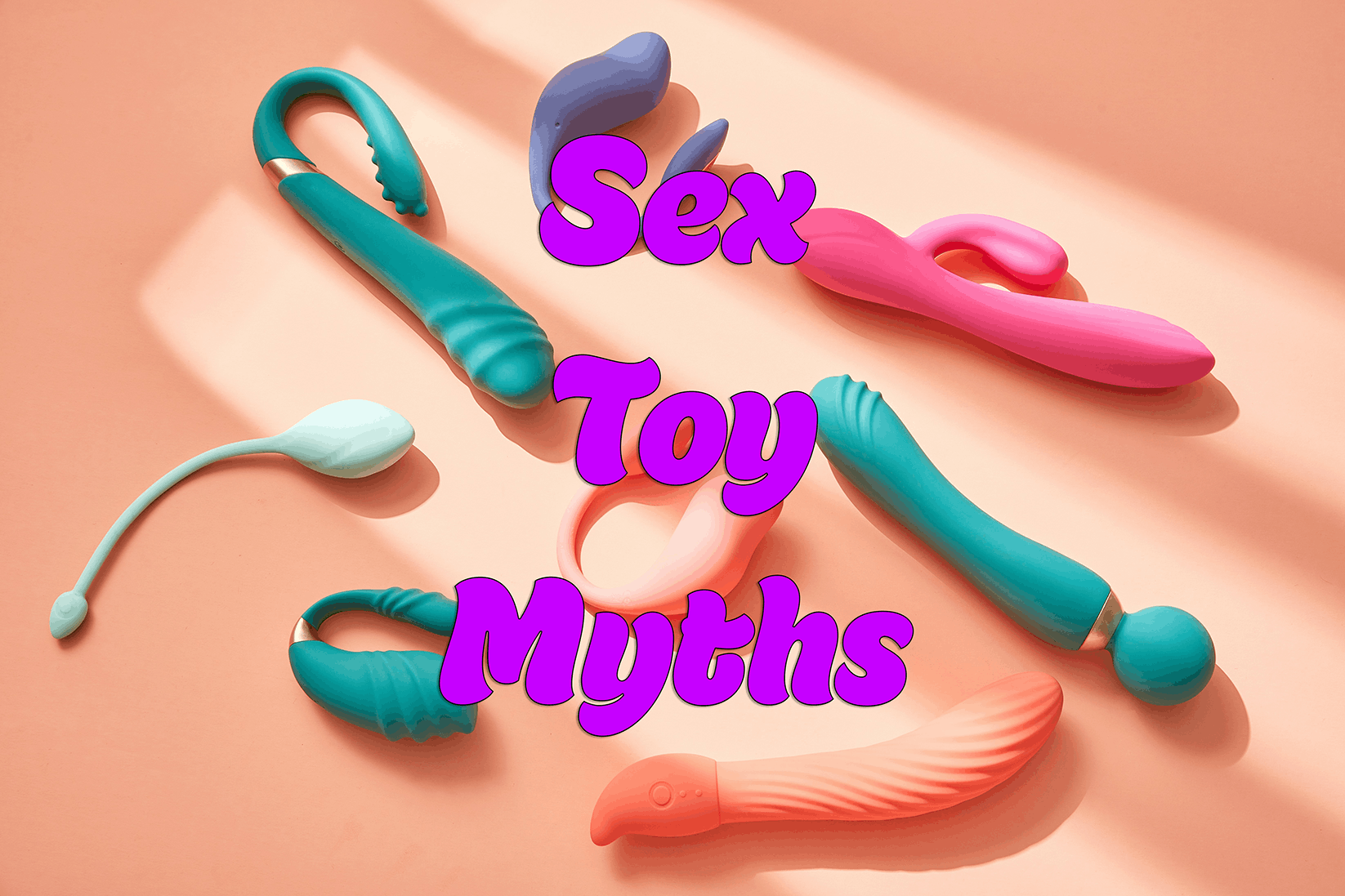
Sex Toy Myths About Relationships & Partnered Sex
Myth: Sex toys ruin partnered sex / make toyless sex worse / mean your partner isn’t enough.
Fact: Sex toys do not replace interpersonal intimacy. For many people and couples, they are used to support communication, exploration, and connection rather than replace a partner. Sex toys can open up conversations about preferences, boundaries, and pleasure in ways that might not otherwise happen. Rather than taking something away from the relationship, they often add variety and shared exploration. It can also help reframe pleasure as something collaborative instead of competitive. When partners approach toys as a team, it can strengthen trust and reduce pressure on either person.
Resource: Come as You Are by Emily NagoskiMyth: Vibrators and sex toys are only for single people.
Fact: People use sex toys across all relationship statuses. Being partnered does not eliminate the potential benefit of incorporating toys into sexual experiences. This belief often comes from the idea that our partner should meet every sexual need we have “without help.” In reality, many couples use toys to explore new sensations and maintain engagement over time. Using a toy does not indicate dissatisfaction, but rather openness to exploration. It can also reduce pressure on performance and increase shared curiosity.
Resource: Planned Parenthood — Sex Toys & MasturbationMyth: Using a toy during partnered sex doesn’t “count” as real sex.
Fact: Sexual experiences are defined by the people involved, not the tools used. Toys can be part of partnered intimacy and do not reduce its validity. Definitions of “real sex” are often shaped by culture rather than personal meaning. Expanding these definitions allows for more flexibility and authenticity in relationships. What matters most is mutual consent, comfort, and connection. Removing rigid expectations can reduce anxiety and increase satisfaction.
Resource: Scarleteen — What Counts as Sex?
Myths About Pleasure & Body Response
Myth: You need a specific toy to enjoy sexual pleasure / one toy works the same for everyone.
Fact: Bodies respond differently. There is no single toy or approach that works universally. Pleasure is highly individualized, and exploration is often more helpful than searching for a “perfect” solution. It may take time to understand what works best for your body. Giving yourself permission to experiment can reduce pressure. There is no right or wrong way to experience pleasure.
Resource: Guide To Getting It On Kindle Edition by Paul JoannidesMyth: Bigger toys always provide more pleasure.
Fact: Size does not determine pleasure. Comfort, type of stimulation, and personal preference are often more important factors. For many people, larger options can lead to discomfort rather than increased satisfaction. Pleasure often comes from the right type of stimulation, not intensity. Smaller or more targeted toys may better match individual needs. Listening to your body is more helpful than following assumptions.
Resource: Good Clean Love — Sexual Wellness EducationMyth: If you need a vibrator to orgasm, something is wrong with you.
Fact: Many people simply respond more consistently to certain types of stimulation. This is a variation in arousal patterns, not a problem. Bodies vary widely in how they experience arousal and orgasm. Vibrators can provide consistent stimulation that supports natural response patterns. This does not replace function, it supports it. Letting go of expectations can reduce pressure and increase ease.
Resource: Come as You Are by Emily NagoskiMyth: Over time, vibrators will numb sensitivity.
Fact: There is zero evidence that sex toys damage sensitivity.
Any changes in sensation are typically temporary and context-dependent (just like changes in sensation after you spend 30 minutes holding the handle of a lawnmower). Temporary desensitization can happen with prolonged use, but it usually resolves quickly. Taking breaks or varying stimulation can help maintain sensitivity. The body is adaptable and responsive rather than easily damaged. Concerns about long-term harm are not supported by research. Resource: Healthline — Will Using a Vibrator Too Often Desensitize My Clitoris?
Myths About Safety & Use
Myth: Sex toys are unsafe or dangerous / toys are dirty or wrong to use.
Fact: Sex toys are safe when used and cleaned properly. Like many personal items, hygiene and correct use matter. Using body-safe materials and following cleaning instructions reduces risk significantly. Many concerns come from lack of information rather than actual danger. Choosing reputable brands can also increase safety. Understanding care practices allows for confident use.
Resource: LELO — Sex Toy Care GuideMyth: Sharing sex toys is always safe if you trust your partner.
Fact: Sharing toys requires proper cleaning and, in some cases, barrier protection. Trust does not replace hygiene practices. Even in trusting relationships, there are still health considerations. Using condoms on toys or cleaning thoroughly between uses can reduce risk. This is especially important when switching types of use. Open communication supports both safety and comfort.
Resource: CDC — Safer Sex PracticesMyth: You can use any household item as a safe alternative.
Fact: Household objects are not designed for sexual use and may carry safety risks. These items may break, cause irritation, or introduce bacteria. They are not made with body-safe materials or tested for internal use. Using purpose-designed products reduces risk significantly. Safety should always be prioritized over convenience.
Resource: Dame Products — Safe Sex Toy EducationMyth: You’ll get addicted to your sex toy.
Fact: You may have favorites and develop routines, but that isn’t addiction. You may find that you start to prefer your toy over any other form of sexual play, that isn’t an addiction either. Sometimes that may mean talking with your sexual partner about what you enjoy so they are able to play differently with you. Or maybe you incorporate your toy into your partnered play. And some women/vulva-owners may find achieving orgasm difficult to do without a toy, and that isn’t addiction either.
The truth is, unless the behavior is becoming a compulsion that truly feels “out of control” and is negatively impacting your life, having a favorite or “go-to” sex toy isn’t a problem.
Myths About Identity, Cost, and Normalcy
Myth: Sex toys are all expensive / more expensive means better pleasure.
Fact: Cost does not determine quality of experience. Different options work for different people regardless of price. There are many affordable, body-safe options available. Higher price points may reflect features, but not necessarily better outcomes. It’s more helpful to focus on personal needs and comfort. Exploration does not need to be expensive.Myth: Sex toys are only for kinky people.
Fact: Sex toys are used by people with a wide range of preferences and identities. This belief is rooted in stereotypes rather than reality. Put simply, sex toys are tools, not labels. Many people use toys in simple, everyday ways. Using a toy does not define identity or preferences. It reflects personal choice and curiosity.Myth: Sex toys are only for young people.
Fact: Sexual wellness exists across the lifespan. People of all ages may choose to use sex toys. As bodies change, needs and preferences may shift. Some people find toys more helpful with age as our bodies aren’t as sensitive as they used to be. There is no age limit on pleasure or connection. Sexual health remains important throughout life.Myth: All sex toys are loud or obvious.
Fact: Many modern options are designed to be quiet and discreet. Privacy concerns can prevent exploration, but many products are designed with discretion in mind. Reading reviews can help identify quieter options. There are also compact and travel-friendly designs. Feeling comfortable with privacy can support a more relaxed experience.
Resource: GoodVibes — Discreet Sex Toys
Misinformation around sex toys often comes from stigma or limited education, not from evidence. When people have access to accurate, non-judgmental information, it can become easier to approach sexuality with more clarity and less shame.
For some, learning the facts is enough to shift how they think and feel about their experiences. For others, there may be deeper layers, like anxiety, relationship dynamics, or past experiences, that are also worth paying attention to.
At Pivotal Counseling, we support individuals and couples in exploring their relationship with intimacy, comfort, and connection in a way that feels safe and collaborative.
Wherever you are in your sexual journey, you deserve to feel informed, supported, and at ease in your own experiences. If you’re looking for additional sexual health guidance, you can schedule a free, no-obligation consultation with one of our clinicians to continue exploring what is myth and what is fact in a supportive space.
